

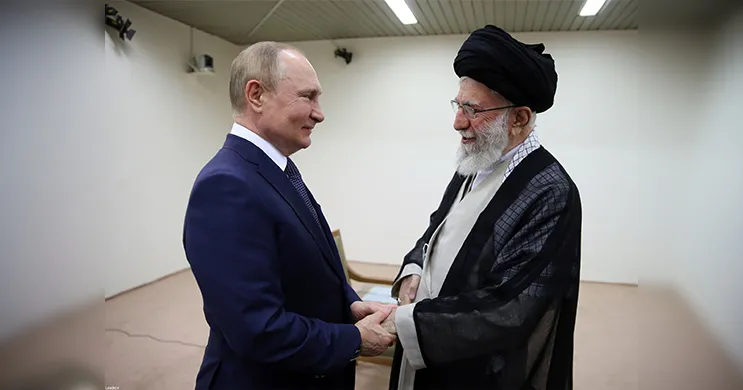
Iran’s recent nationwide protests transcended domestic unrest, evolving into a significant geopolitical contest. While Western powers like the United States and Israel signaled support for anti-government demonstrations, Russia critically intervened to bolster Iran’s ruling regime. This timely support proved decisive, ensuring Ayatollah Khamenei’s government weathered the internal challenge and ultimately fortified the strategic ties between Moscow and Tehran. The outcome was not just the survival of an authoritarian leadership, but a deeper, more robust alliance, highlighting Russia’s proactive role in shaping Middle Eastern stability.
Russian President Vladimir Putin’s administration provided multifaceted support, combining crucial diplomatic backing with advanced technological assistance. Western efforts to pressure Tehran were effectively neutralized by Russia’s timely interventions. Moscow supplied Iran with sophisticated tools designed for monitoring and controlling dissent, including internet censorship, social media tracking, and cutting-edge facial recognition systems. Furthermore, Russia extended its support to cybersecurity, safeguarding Iranian government websites from hacking attempts and deploying electronic warfare systems to disrupt satellite internet services, thereby limiting protesters’ communication and coordination capabilities.
The stakes for Russia were substantial. The fall of Khamenei’s government would have meant the loss of a vital ally in the Middle East, a partnership cultivated over the past decade through military cooperation and an intelligence-sharing framework. This intervention is also seen as part of Russia’s broader strategy to counter “color revolutions,” drawing on experiences from Ukraine, Georgia, and Iran’s own 2009 Green Movement. The alliance has become reciprocal, with Iran providing critical military assistance to Russia in Ukraine, further solidifying the foundation for a deeper, mutually beneficial strategic alignment.
Russia’s intervention proved instrumental in enabling Iran to respond efficiently and decisively to the widespread protests. By leveraging advanced surveillance technologies to identify leaders and track activities, alongside robust cyber defenses for its communications infrastructure, the regime maintained order and prevented widespread disruption. This episode unequivocally demonstrates Russia’s expanding influence in Iran and the broader Middle East, strengthening its strategic position and ensuring continued cooperation with a key regional partner. The partnership, combining military aid, intelligence sharing, and cyber capabilities, represents a significant geopolitical shift, reinforcing authoritarian control against external pressures.
Source: Read Original
