

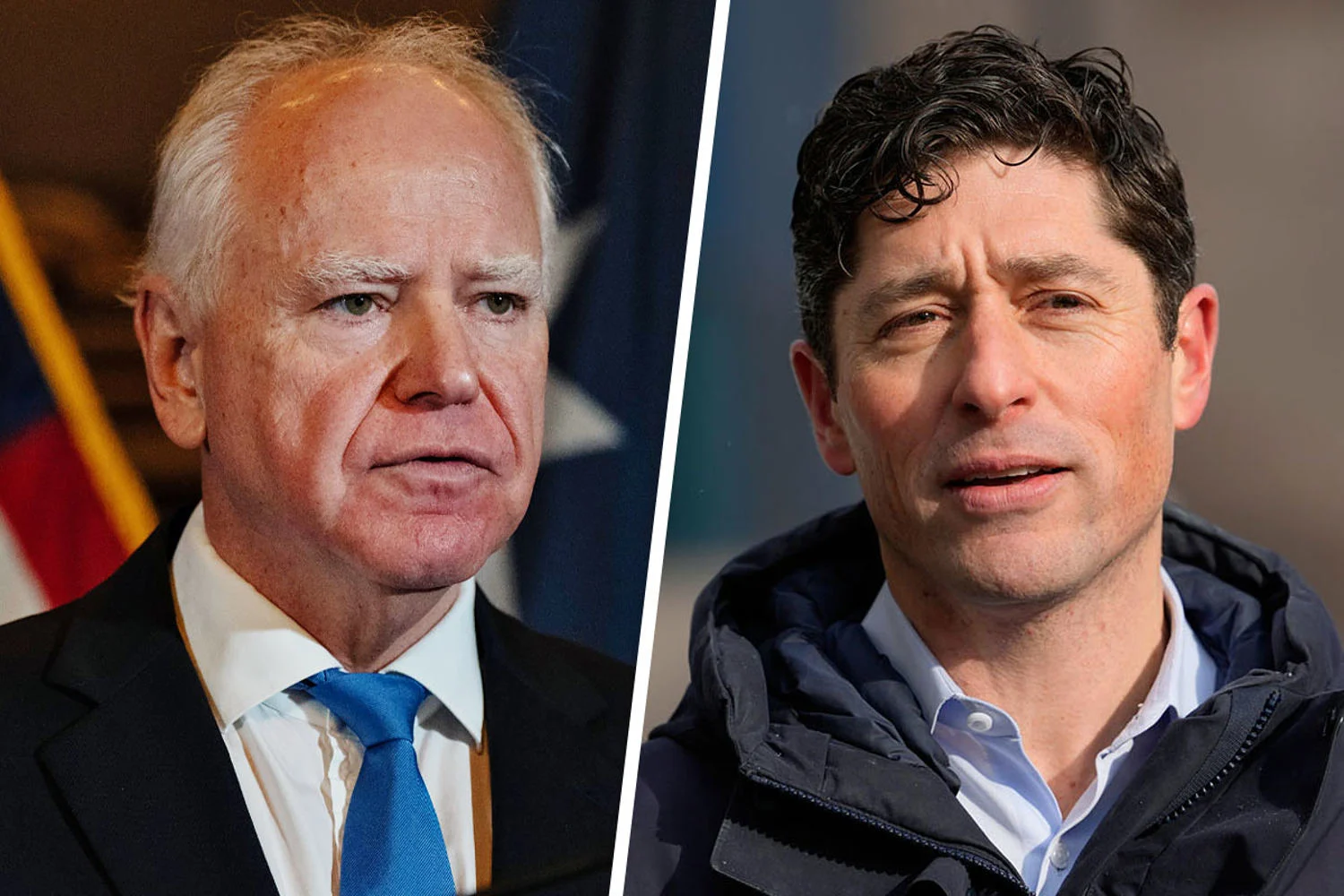
The U.S. Justice Department has launched a high-profile investigation into Minnesota Governor Tim Walz and Minneapolis Mayor Jacob Frey. The probe centers on allegations that the officials conspired to impede federal immigration enforcement operations through their public statements. This federal inquiry follows weeks of heightened tensions and protests across Minneapolis, ignited after an ICE officer fatally shot Renee Nicole Good, a mother of three and U.S. citizen, during ongoing immigration activities in the city. The situation escalated further as both Walz and Frey vocally questioned the justification for the officer’s actions and criticized the FBI’s decision to exclude local authorities from the subsequent investigation into Good’s death, a move that drew significant public and political backlash.
Both Governor Walz and Mayor Frey have vehemently rejected the federal investigation, labeling it as politically motivated and an authoritarian tactic. Governor Walz explicitly compared the situation to past instances of the justice system allegedly being weaponized against political opponents, stressing that the federal agent involved in Good’s shooting remains uninvestigated. Mayor Frey asserted his unwavering stance, stating he would not be intimidated for defending Minneapolis, its local law enforcement, and residents against what he described as “chaos and danger” brought by the current Administration. Their defiant statements underscore a deep rift between state and federal leadership.
The legal basis for this investigation is a rarely applied statute originating from the Civil War era, which was recently highlighted in a memo by Attorney General Pam Bondi, outlining expanded investigations into individuals labeled domestic terrorists. This unusual application has immediately triggered widespread concern among legal experts regarding potential First Amendment violations, particularly because investigating public officials for their political speech typically mandates consultation with the DOJ’s Public Integrity Section. However, this section has reportedly been weakened and marginalized under the current administration, adding to the controversy. Aaron Terry of the Foundation for Individual Rights in Education explicitly called the probe “blatantly unconstitutional and intolerable in a free society.”
The DOJ investigation into Walz and Frey unfolds against a backdrop of persistently high tensions in Minneapolis, exacerbated by a recent incident where a federal officer shot a man in the leg following a traffic stop and alleged assault. This adds another layer of complexity to a city already grappling with the aftermath of the Good shooting and the continuing federal immigration enforcement surge. The friction between local and federal authorities is intensifying, raising profound questions about the delicate balance between constitutional rights, governmental oversight, and the integrity of law enforcement in politically charged environments, setting a significant precedent for future interactions.
Source: Read Original
